

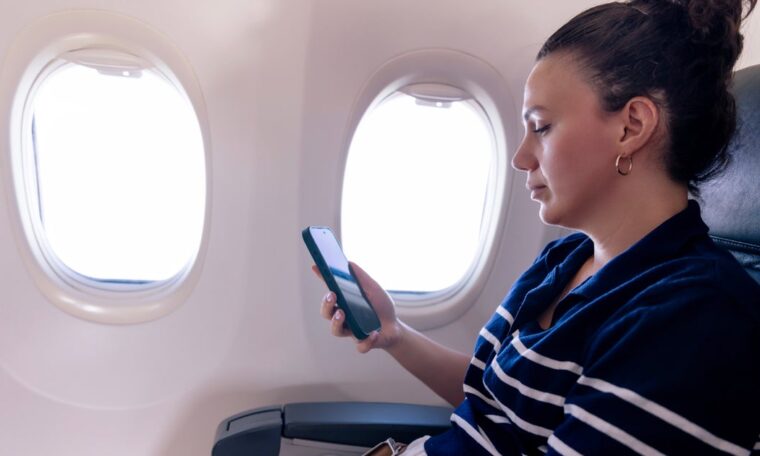
When an airline upgraded me to first class on a flight from Mumbai to London, I thought something had finally gone my way. It was my first time at the very front of the plane, with a wider seat, the full recline, and meals arriving on proper crockery.
By the time we landed at Heathrow 10 hours later, I’d reached a slightly deflating conclusion. The first-class product was better than economy ― but not enough to justify what airlines typically charge.
That gap between what airlines sell and what passengers receive is something the people closest to it understand best. Flight attendants see the product from the inside on every shift. And they have thoughts about which upgrades are worth spending your money on.
Rachel Maxwell worked as a flight attendant before becoming a pilot for a U.S. legacy carrier. She has seen the short-haul domestic first-class product from the cockpit and the cabin.
“Sometimes customers think they’ll be getting a lie-flat seat,” she said. “That only happens on longer routes.” The confusion is easy to understand. Airlines use the same first-class label whether you’re flying 40 minutes or 14 hours.
On CRJ jets, which handle short domestic routes for Delta, American, United and others, the first-class reality rarely matches expectations.
“Those spaces are especially cramped,” Maxwell said.
The E175 offers something different. Its first-class cabin runs a single seat on one side of the aisle and two on the other, meaning seats 1A through 4A give solo travelers one side of the aircraft to themselves. “You’d be by yourself,” Maxwell said. “No curious neighbors.”
The CRJ offers none of that.
“Some older CRJs don’t have the overhead bin space to carry a standard 22-inch rollerboard,” Maxwell noted, which means a valet check at the gate. On a tight connection, that can cost you a flight. “Not all CRJs are equipped with ovens and therefore your lunch or dinner will be chilled,” she added. “Which is OK, but not a luxurious experience.”
The free drinks are often the last remaining selling point.
“I know a lot of people who can afford first class and prefer the legroom of the exit row over the added width and minimal added legroom of a first-class seat,” she said. “If it’s the free drinks you’re after, you can buy a lot of beverages with what you would have saved on the ticket.”
“
I know a lot of people who can afford first class and prefer the legroom of the exit row over the added width and minimal added legroom of a first-class seat.
– Rachel Maxwell
Maxwell’s best upgrade recommendation has nothing to do with the cabin. “I’d buy Global Entry,” she said. “You are also granted access to TSA PreCheck. It’s under $200 for five years.”
For travelers with more flexibility, Maxwell pointed to airport lounge memberships as a smarter annual spend. “Spend a little more money and get an annual pass to access an airport lounge.”
The mismatch between what’s sold and what’s delivered gets more expensive the further from home you fly.
Jay Robert spent more than a decade flying with Emirates before settling in Europe, where he has been based for two decades.
“Domestic First Class on most U.S. airlines is not worth the price tag,” Robert said. “It is not truly First Class. It is a premium economy product labeled as First Class.”
Part of the reason comes down to who is serving you. “In the U.S. market, crew choose their positions based on seniority, and often the most experienced crew take economy because of the lighter workload, leaving First Class service to the least experienced flight attendant,” Robert said. “Compared to outside the U.S., where the most senior crew work the premium cabins and have received more extensive service training, the difference can be noticeable.”
The mismatch becomes genuinely expensive when Americans book European trips.
“When Americans book Business Class with a U.S. airline that connects onto a European short-haul partner, they come from a proper international Business Class suite and find themselves in a narrow economy seat with the middle seat next to them free,” Robert said. “These seats can make U.S. domestic First Class look fancy by comparison. Airlines fail to clearly tell passengers that they are spending double the price to sit in the same seat as an economy passenger who booked the extra legroom section.”
If you’re buying a transatlantic ticket with a European connection, check which aircraft and cabin you’re getting on each leg. “They would often be better off booking the exit row and buying a fresh meal from the economy service,” he said. “More legroom, about the same food, and significantly less money.”
There are pros and cons to spending your money on seat upgrades.
Upgrades aren’t limited to your seat. Flight attendants also keep an eye on smaller purchases that promise convenience but rarely deliver value.
Jeremy Shepherd spent years working long-haul routes as a flight attendant, and now travels to Asia nearly every month as a professional buyer. He watched plenty of passengers fall for the duty-free pitch.
“If anyone were to really check the prices, they’d see that almost nothing there is a deal,” Shepherd said. “It’s all sold and promoted as a deal, but it’s really just a convenience for bored passengers to spend more on.”
The prices are deliberately made hard to challenge. “There are a lot of products made for duty-free that are not typically available in retail stores,” Shepherd said. “You see odd-sized candies, no-name mobile device charging blocks, jewelry collections only available on duty-free.” The product exists to be marked down. The markdown is the point.
Few add-ons cost less than in-flight Wi-Fi, and few disappoint more reliably.
“I can’t count how many times I’ve tried to work on a flight and found there really isn’t any connection available,” Shepherd said. It is a familiar disappointment. A few years ago, I paid for in-flight internet to watch my football team play in a playoff game. It lasted 20 minutes before cutting out. I landed knowing the result and having experienced almost none of it.
Shepherd sees individual failures like this as part of a broader pattern in how airlines now treat the people they carry. “We treated people like humans, and passengers were appreciated,” Shepherd said. “Now passengers are treated like ATM cards.”
On that Mumbai to London flight, I got a free glimpse of what airlines charge a premium for. I’d take a free upgrade again, but it is not worth paying a premium for. I’ll save my money for when I land.
Source link
CHECK OUT: Top Travel Destinations
READ MORE: Travel News