

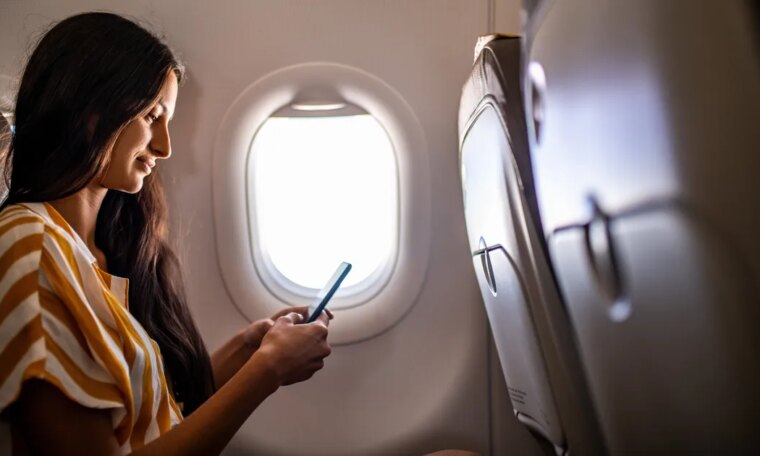
It’s one of the most familiar instructions in air travel, yet this simple directive often goes ignored. As the plane prepares to take off or touch down, flight attendants ask passengers to return their seats to the upright position.
While plenty of passengers comply immediately, others require reminders from crew members as they make their way down the aisles. And as we’ve seen on social media, some sit and wonder: “Does this actually matter?”
Unlike some aviation rules that have evolved with changing technology ― think phones in airplane mode or removing shoes at security ― the upright seat rule isn’t a relic that institutions have simply failed to revisit. It’s a well-founded safety requirement in commercial aviation, and the reasoning behind it is worth understanding. HuffPost asked experts to break it down.
It all comes down to the two most critical moments of your flight.
To grasp the reasoning behind the seat recline rules, you must first understand the significance of takeoff and landing in terms of safety risk.
“Takeoff and landing are the most critical phases of flight from a safety perspective,” Yuvraj Datta, the chief supply and revenue officer at the travel tech company Fareportal, told HuffPost. “Cabin safety procedures are designed around the possibility ― however unlikely ― of a sudden evacuation or emergency during these phases of flight.”
According to Boeing’s most recent Statistical Summary of Commercial Jet Airplane Accidents report, roughly 70% of fatal aviation accidents occur during takeoff, initial climb, final approach and landing.
“An upright seat ensures passengers are properly positioned with their seat belt and allows everyone behind them enough space to move quickly if an evacuation becomes necessary,” said Paula S. Adams, a former crew member for Etihad Airways who now works as a private flight attendant and aviation and business trainer. “A reclined seat can slow down an evacuation by reducing the space passengers need to stand up and exit their row. In an emergency, even a few seconds can make a significant difference.”
Having seats upright during takeoff and landing allows airlines to prioritize passenger safety by maximizing the amount of room people have to stand up and access the aisle in an emergency evacuation. (There are also procedures for evacuating passengers with disabilities who need assistance.)
“A reclined seat reduces the physical clearance available to the passenger directly behind it by several inches,” explained AirAdvisor founder and CEO Anton Radchenko. “Under normal conditions, that’s irrelevant. In an evacuation with 180 people clearing the aircraft in under 90 seconds, that six inches matters more than almost anything else in that cabin.”
MStudioImages via Getty Images
It’s not just bureaucracy theater. There are safety reasons behind upright seat rules.
“Returning seats to the upright position keeps the cabin in the configuration the aircraft was designed and certified to operate safely,” said Shannon Brown, a Delta Air Lines flight attendant and member of the company’s health, safety, security and wellness committee. “Commercial aircraft are certified to demonstrate that all customers can evacuate within 90 seconds under emergency conditions. Keeping seats upright is one of several simple steps that helps support that objective.”
That’s partly why the Federal Aviation Administration requires airline crews to follow detailed safety checklists.
“In an emergency evacuation, even a small delay can have a ripple effect throughout the cabin, slowing the movement of dozens of passengers,” Datta said. “Airlines and regulators focus heavily on minimizing anything that could impede evacuation because every second matters.”
The same principle applies to the brace position, which passengers may be instructed to assume in the event of a serious incident during takeoff or landing. Assuming it correctly requires the ability to position yourself safely.
“The brace position requires forward movement,” Radchenko said. “A reclined seat in front of you restricts that and narrows your exit path at exactly the moment when speed matters most.”
Physics also plays an important role.
The case for keeping seats upright extends beyond evacuation logistics and the brace position.
“Passenger seats are designed to withstand impacts with up to 16Gs of force,” said Henry Harteveldt, president and airline industry analyst at Atmosphere Research Group. “In commercial airliners, safety agencies such as the FAA and its foreign counterparts generally require passenger seats to be upright for takeoff and landing, as that position provides the greatest protection to the passenger should some type of accident occur.”
Dan Bubb ― a former airline pilot and professor in residence in the honors college at the University of Nevada, Las Vegas ― also spoke to the physics at work on a fast-moving aircraft.
“Given the physical forces, particularly with the plane going so fast ― when the plane rotates off the runway, everything is naturally going to start pushing backwards,” he explained. “So you want to make sure that you’re not going to harm the person sitting behind you, that you’re not going to crunch their legs or slide out of your seat and fall on top of them. Because people and objects will shift, particularly when the plane is climbing.”
The same principle applies to landing.
“When you land and the pilot puts the engines in reverse thrust, notice how you feel yourself lurching forward, and then you’ll hear the bags and the overhead bins sliding,” Bubb said. “It’s just the laws of physics for everyone’s safety that they want your seat up, everything secured and stowed, just so nothing falls and hits somebody.”
The tray table rule follows the same logic, both in terms of keeping a clear path for an evacuation and preventing harm from the physics of a fast-moving aircraft.
“A lowered tray table can become both an obstacle and a potential injury hazard,” Datta said. “It can make it more difficult for passengers to exit their seats quickly and may interfere with proper brace positions during an impact. Additionally, objects resting on tray tables could become projectiles during a sudden deceleration or hard landing.”
Harteveldt noted that the tray table itself poses a potential risk and therefore must be stowed to “avoid injury during takeoff and landing should the tray come loose from its fittings.”
“A deployed tray table places a rigid surface between you and the seat in front during sudden deceleration,” Radchenko echoed. “It also blocks your ability to stand and move when you need to. Both rules serve the same purpose: Remove every preventable obstacle before entering the phases of flight where obstacles have real costs.”
Ultimately, it’s all part of a broader philosophy that extends to carry-on bags and anything else in the cabin.
“Whether it’s an upright seat, a stowed tray table or a carry-on bag that is fully stowed under the seat in front of the customer or in an overhead bin, each procedure is designed to minimize potential hazards and help maintain a clear path for customers and crew,” Brown said.
These rules may feel mindless and routine, but that’s kind of the point.
At a moment when trust in institutions is running low, it’s worth noting that the upright seat rule is not a norm that persists out of bureaucratic inertia. It isn’t a holdover from an earlier era of aviation that no one has gotten around to updating. It’s a research-backed practice that exists because it works.
“Commercial aviation safety is built on multiple layers of protection, many of which may seem routine to customers but are based on decades of research, operational experience and regulatory standards,” Brown said.
Procedures like fastening seat belts, securing carry-on items, stowing tray tables and returning seats to an upright position work together create a safer cabin environment.
“Flight attendants are highly trained safety professionals, and every safety announcement they make serves a purpose,” Brown noted. “Safety is a shared responsibility, and every customer plays an important role. By following crew member instructions and preparing the cabin for takeoff and landing, customers help support a safer experience for themselves, their fellow customers and our crew.”
And while it’s easy to tune out safety instructions you’ve heard dozens of times, experts say, the very familiarity of these rules is a sign they’re working.
“Many airline safety requirements can feel routine because serious incidents are rare, but that’s precisely the point,” Datta said. “Commercial aviation safety plans are built on layers of procedures that may seem minor individually but collectively help ensure passengers can respond quickly and safely in an emergency.”
Adams, who spent years enforcing these rules as a flight attendant, agreed.
“These requests may seem routine, but they’re based on years of safety research,” she said. “Small actions from every passenger help create the safest possible cabin environment.”
So the next time a flight attendant asks you to put your seat up, it’s worth remembering that your comfort is not the No. 1 priority. It’s about making sure that if something goes wrong in the most critical minutes of your flight, everyone ― including the person behind you ― can get out fast.
That said, Bubb wants anxious fliers to keep things in perspective. Despite the rules and the risks they’re designed to guard against, commercial aviation remains remarkably safe.
“You have the most highly trained pilots and flight attendants in the world,” he said. “I know some people will get nervous when they see news of plane crashes or hear about incidents, but on the whole, flying is really, really safe. So people should feel comfortable. I’m often asked if I would feel comfortable putting my family on a plane. I would say absolutely yes because I know the flight crew is just phenomenal ― highly trained, held to rigorous standards and great at what they do.”
Source link
CHECK OUT: Top Travel Destinations
READ MORE: Travel News