
While most of Britain has long packed away the tinsel and taken down the tree in January, the UK’s most isolated island is only just getting into the festive spirit.
Foula, a tiny Scottish island located 20 miles west of Shetland, celebrates Christmas on January 6 – a tradition that sets it apart from the rest of the country.
The timing stems from a calendar still used by the island’s residents: the Julian calendar, introduced by Julius Caesar in 46 BCE.
It remained the dominant system in the Western world for over 1,600 years until it was replaced in 1752 by the Gregorian calendar, which most of the UK adopted, while residents in Foula continued using the former.
As time went on, the difference between the two systems grew.
Following a leap year change in 1900, Christmas and New Year on Foula drifted 12 days later than elsewhere in Britain, which has lead to the island having its own date for Christmas Day.
Home to just 35 residents, Foula is often described as one of the most remote places in the UK.
The island has no pubs, shops or bars, no Wi-Fi, and no connection to the National Grid, and supplies arrive only by boat or small plane – when the weather allows.
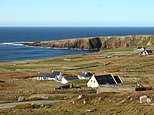
Foula, a tiny Scottish island that is considered one of the most remote places in the UK, celebrates Christmas on 6 January
Residents follow the Julian calendar – introduced by Julius Caesar in 46 BCE before it was replaced by the Gregorian calendar in 1752
However, its isolated location is somewhat a bonus, as Foula – which spans five square miles – offers plenty of striking natural wonders.
The island is characterised by five dramatic peaks – one of them being Da Kame, said to be among the highest sheer sea cliffs in Britain.
It is also regarded as one of the best places in the UK to witness the Northern Lights – or the ‘Mirrie Dancers’ according to locals – which can be seen most often between mid-October and mid-March, depending on conditions.
Famed for its native sheep, the island boasts its own unique wildlife, while its waters are popular with scuba divers who arrive to explore shipwrecks, including the RMS Oceanic, a World War ship launched in 1899 and wrecked near Foula.
Visitors who prefer to stay out of the water can join guided walks run by the Foula Ranger Service, or navigate the island at leisure using maps provided by Foula Heritage.
To reach the island, simply hop on a ferry, which operates three times a week and takes around two hours, or a flight from the Shetland Mainland, as advised by Shetland.org.
It’s worth noting accommodation is self-catered, meaning visitors must bring all necessities, including food.
It comes as a Welsh expat has shared the benefits and drawbacks of remote living after moving to an uninhabited island near New Zealand.
Following a leap year change in 1900, Christmas and New Year on Foula drifted 12 days later than elsewhere in the UK, which means they now celebrate the big day on January 6
Home to just 35 residents, Foula has no pubs, shops or bars, and no Wi-Fi, and supplies arrive only by boat or small plane – when the weather allows
Pictured: Foula residents Stuart Taylor, Penny Grear, Sheila Grear, Davie Wilson and Jim Grear play music and enjoy a drink at a late night gathering on October 2, 2016
Catrin, a 22-year-old outdoor instructor, has worked in far-flung destinations all over the globe, from Borneo to India, and regularly documents her experiences, itineraries, advice, tips and tricks on her travel blog.
In 2023, Catrin left her job in Malvern, England, and relocated to Motutapu Island, situated in the Hauraki Gulf to the northeast of Auckland, New Zealand, where she spent nine months working in an outdoor recreation centre.
Taking to her blog in August of that year, she highlighted the pros and cons of living in a secluded location.
Though the island boasts rolling hills, farmland, beaches, walking trails and scenic views, it has been uninhabited for over 700 years and is only accessible either by ferry from Auckland or via a causeway from Rangitoto Island.
Source link
CHECK OUT: Top Travel Destinations
READ MORE: Travel News