

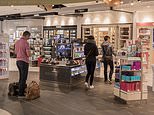
Before a recent flight to Lisbon from Luton I went for a browse in the duty-free shop – having not been to any for a while – and was shocked… but not by the great value of what was on offer.
My reaction, as it turned out, was quite the opposite.
My favourite perfume is the popular – and pricey – Gucci Flora Gorgeous Gardenia Intense, so I went over to take a look. This was when my eyebrows were raised. A 100ml bottle was marked as £131 – with a red label boasting that I would ‘save £14’.
This meant that its recommended retail price (RRP), as stated by the shop, was £145. Yet a two-minute Google search revealed that the same size of bottle was on sale at both Boots and John Lewis for £108.75, while it was £116 at Lookfantastic. The so-called ‘saving’ on the duty-free price tag was £23 more than could be easily found elsewhere.
So what was going on?
Duty free is presented as a cheaper way to shop, from ‘savings’ banners on price tags and display boards in stores – but just about everyone I know complains about how highly priced so many products seem.
It should, at least, work like this: you purchase goods without paying import, sales, value added or other taxes at a price that’s therefore lower than on the high street.
And this is what the advertising in airports would have you believe: you’re getting a bargain. In reality, however, you often quite clearly are not.
Shopping at duty free is meant to be cheaper as you can purchase goods without paying import, sales, value added or other taxes
A 75cl bottle of Moet & Chandon Rose Imperial Champagne was £43.99 at duty free – but you can find the same item for £41 at Asda and on Amazon
Curious as to whether this lack of ‘value’ extended to other items, and with time to kill before my boarding gate was announced, I checked the Sol de Janeiro beauty range.
Here, I found Beija Flor Elasti-Cream costing £43.45 at duty free for 240ml. But it was £36 at Amazon, Boots and Lookfantastic. Meanwhile, Moroccanoil’s hydrating shampoo was on sale for £18.30, yet could be found for £16.99 at Toni&Guy.
It’s not just beauty products but food and drink, too. A one-litre bottle of Baileys Irish Cream, for instance, was marked as £23.99. At Drinksupermarket.com this could be picked up for £16.99.
A 75cl bottle of Moet & Chandon Rose Imperial Champagne was £43.99 – marked as £8 off the RRP. But you can find the same item for £41 at Asda and on Amazon.
And a one-litre bottle of Jack Daniel’s Old No.7 Tennessee Whiskey is sold for £27.99 at duty free, also marked as £8 off – while it’s £24 on Amazon.
As for tech gadgets, Sony’s WI-C100 wireless in-ear headphones are on offer for £37.99 but can easily be found for £29 online.
Designer fashion items followed the same trend, as I was to find on a later flight out of Heathrow.
The label of one pair of Prada sunglasses on offer said: ‘RRP £355, you pay £295.80.’ But the same pair was online for £203 from Amevista, with free shipping: 31 per cent cheaper.
So how does this happen?
Gavin Lapidus, company director at travel agency eShores, explained: ‘Reductions shown are often based on marked-up RRPs… often the “deal“ isn’t that great.
‘To avoid overspending before you’ve even begun your holiday, resist impulse duty-free buys unless you’re confident you’re getting real savings.’
Your browser does not support iframes.
Bundle deals or travel edition versions of products can also explain the significant price differences between the wider market and duty-free shops
Bundle deals or travel edition versions of products can also explain the significant price differences. Clay Cary, a senior trends analyst at CouponFollow, said: ‘Sometimes the only way to buy the product is in a unique bundle or unique packaging that can only be found in the duty-free shop… the price per ounce of the product in the bundle might actually be higher than the price of the product at home in your regular size.’
The same is often true abroad, where another factor kicks in: currency conversions.
Cary added few customers consider conversion rates until it’s too late: ‘Prices tend to be a nice, clean number like $99 or €99, no matter what the exchange rate is.
‘So, it’s possible to pay more than a shop at home would charge and not even know it.’ Time pressure at airports is another issue, making splurge purchases more likely.
Greg Zakowicz, e-commerce and retail adviser to marketing platform Omnisend, said: ‘Airport shopping is commonly driven by convenience and impulse, and most travellers aren’t checking prices before making a purchase.’
Sam Brown, a visual strategist and founder of Novus Nine, said: ‘The perceived discount is an illusion. These stores are designed to suspend your usual shopping logic.
‘The lighting, the luxury layouts forcing you through the shop and the sense of exclusivity are engineered to make you spend.’
The message is clear: take your time and compare prices – it’s so quick and easy online, and could mean substantial savings.
Source link
CHECK OUT: Top Travel Destinations
READ MORE: Travel News